Sesame Seeds
What are Sesame Seeds?
Sesame is a common ingredient found in many dishes and desserts of Asian and Middle Eastern cuisine. Sesame seeds and sesame oil contain lignans which are known for their anti-inflammatory, anti-carcinogenic, and potential therapeutic effects in disease.
Sesame seeds and oil contain lignans such as the primarily studied lignan sesamin [1].
What is a lignan? Lignans are non-caloric molecules commonly found in plant foods that can act beneficially in the body [6].
Sesamin has been studied for its neuroprotective effects related to Alzheimer’s and Parkinson’s Disease as well as anti-cancer properties [4, 1].
According to Traditional Chinese Medicine, the health qualities of black sesame seeds are superior to white sesame seeds. In a study comparing black and white sesame seed properties, it was found that black sesame seeds may have higher levels of active nutritional components, but both types of seeds are a good addition to the diet [5].
In addition to sesame’s inhibitory effects on growth and inflammation in cancer, the lignan shows beneficial anti-inflammatory properties in non-cancerous cells [1].
Hypersensitivity, or sesame seed allergy, has been identified by eight sesame allergen components of the seed and oil [2].

Nutrient Breakdown
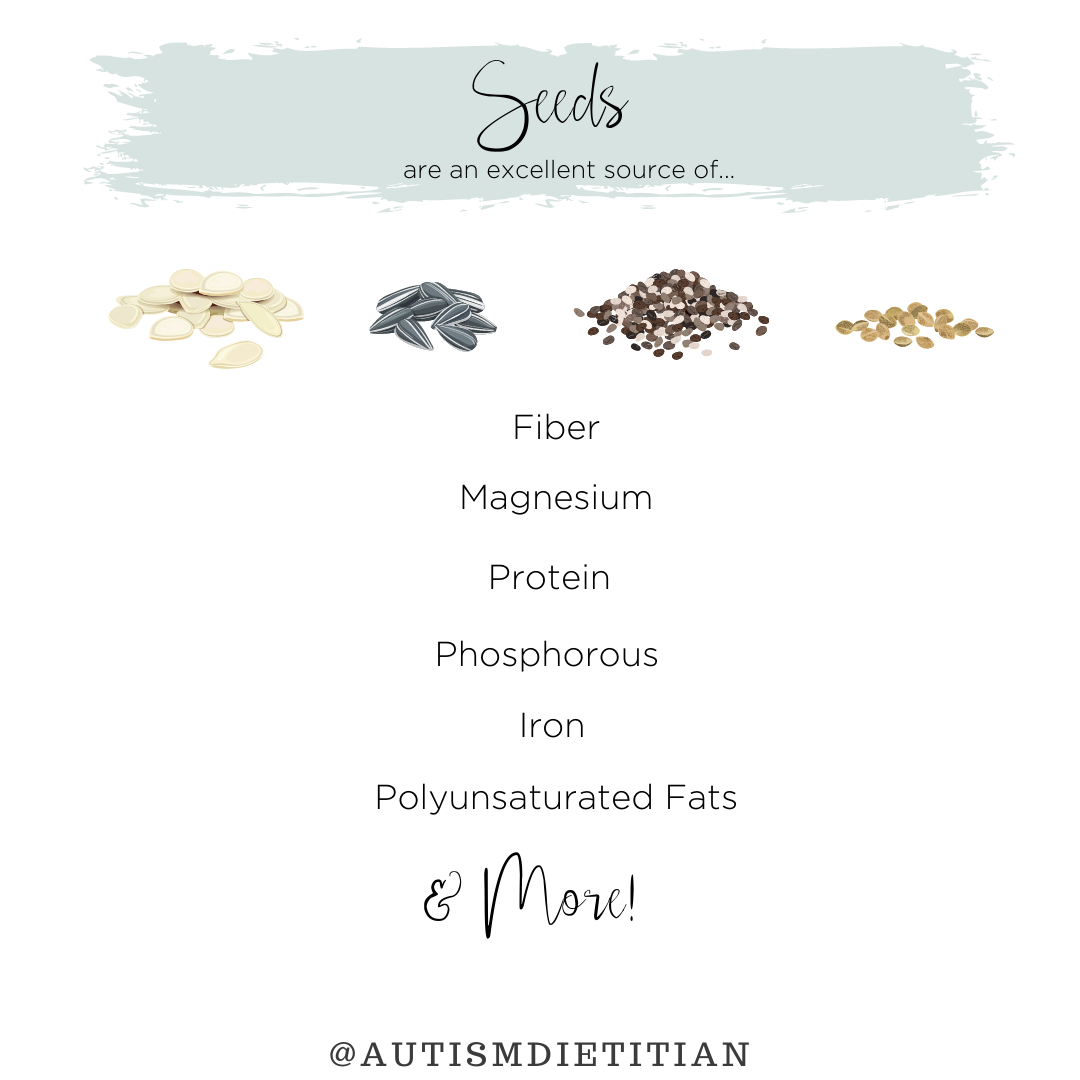
Sesame seeds are a great source of:
Foods Containing Sesame Seeds
Black sesame seeds
White sesame seeds
Sesame butter
Sesame oil
Brittle and candy
Crackers and chips
Tahini
Granola and snack bars
Nut & seed breads
Seasonings such as Japanese spice blends
Furikake
Shichimi togarashi
Hamburger buns, rolls, or bagels
Hummus
Sesame Seed Alternatives
Food Reactions
The body can respond to foods in many different ways including food allergies, food sensitivities, or food intolerances. If you suspect a food reaction, you can either choose to avoid the food or seek food reaction testing. Click here more information on the difference in types of food reactions and testing options.
DISCLAIMER: Always consult with your pediatrician and/or your Registered Dietitian to help you test for a food reaction or to aid you in making individualized dietary changes.
Sesame Seeds & Autism in the Research
There are no current studies on sesame seeds and autism however, sesame seeds show other neurodegenerative and antioxidant properties that may be helpful for those with autism.
Neurodegenerative Diseases
Neurodegenerative diseases, like Alzheimer’s and Parkinson’s disease, are often linked to low nerve growth factor (NGF). The potential therapeutic effects of sesamin were seen in rats, as sesamin enhanced the function of low NGF levels, resulting in increased neuronal cell growth and function [4].
Antioxidant Properties
While there are no studies on sesame seeds and autism, individuals with autism often experience higher rates of oxidative stress. Antioxidants, such as sesame lignans found in the oil or seed act to lower oxidative stress and protect cells [3].
In an animal study, sesame seed lignans were shown to reduce oxidative stress markers associated with age-related cognitive decline and depression [3].
-
[1] Majdalawieh AF, Massri M, Nasrallah GK. A comprehensive review on the anti-cancer properties and mechanisms of action of sesamin, a lignan in sesame seeds (Sesamum indicum). European Journal of Pharmacology. 2017;815:512-521.
[2] Patel A, Bahna SL. Hypersensitivities to sesame and other common edible seeds. Allergy. 2016;71(10):1405-1413.
[3] Shimoyoshi S, Takemoto D, Ono Y, et al. Sesame lignans suppress age-related cognitive decline in senescence-accelerated mice. Nutrients. 2019;11(7):1582.
[4] Udomruk S, Kaewmool C, Phitak T, Pothacharoen P, Kongtawelert P. Sesamin promotes neurite outgrowth under insufficient nerve growth factor condition in pc12 cells through erk1/2 pathway and sirt1 modulation. Evid Based Complement Alternat Med. 2020;2020:9145458.
[5] Zhou L, Lin X, Abbasi AM, Zheng B. Phytochemical contents and antioxidant and antiproliferative activities of selected black and white sesame seeds. Biomed Res Int. 2016;2016:8495630.
[6] Peterson J, Dwyer J, Adlercreutz H, Scalbert A, Jacques P, McCullough ML. Dietary lignans: physiology and potential for cardiovascular disease risk reduction. Nutr Rev. 2010;68(10):571-603.
Authors
Brittyn Coleman, MS, RDN/LD, CLT
Sarah Reale, Dietetics Student